Kurtágiána
PROGRAM NOTES
Program
Robert Schumann: Kreisleriana – IV. Sehr langsam (arranged by Ajtony Csaba)
György Kurtág: Bref messages
I. Fanfare (Péter Solymosi, Thomas Märzendorfer)
II. Versetto – Temptavit Deus Abraham (Heri Choi, Péter Szűcs)
György Kurtág – Johann Sebastian Bach: Actus Tragicus BWV 106 (Diana Buffa, Ivan Buffa)
György Kurtág: Bref messages
III. Ligatura Y
IV. Bornemisza Péter: Az hit…
Máté Balogh: BABEuropeL
György Kurtág: Hommage à R. Sch. (Éva Osztrosits, Horia Dumitrache, Ivan Buffa)
– intermission –
Nina Šenk: Baca II
Judit Varga: Zankend – Stille, stumm, still. Hommage to Márta Kurtág
Marco Stroppa: élet… fogytiglan – imaginary dialogue between a poet and a philosopher
Ivan Buffa: Earthpulse*
Featuring
MIKAMO Central European Chamber Orchestra
Conductor: Ajtony Csaba
Contemporary music is rarely only contemporary. Composers are connected in countless ways—consciously and instinctively, directly or indirectly—to music of earlier and more recent periods. These musical connections are especially significant in the oeuvre of György Kurtág: through the multifaceted and deliberate use of references, homages, and historical reflection, the creative process traverses a wide spectrum of music history.
Kurtágiána joins the series celebrating the 100th birthday of György Kurtág with a special experience that presents the Master’s oeuvre as a living, continuously evolving dialogue. At the evening of the MIKAMO Central European Chamber Orchestra, Kurtág’s music is heard in the context of historical references and contemporary reflections: starting from works by Johann Sebastian Bach and Robert Schumann, compositions by several generations of composers enter into dialogue with one another.
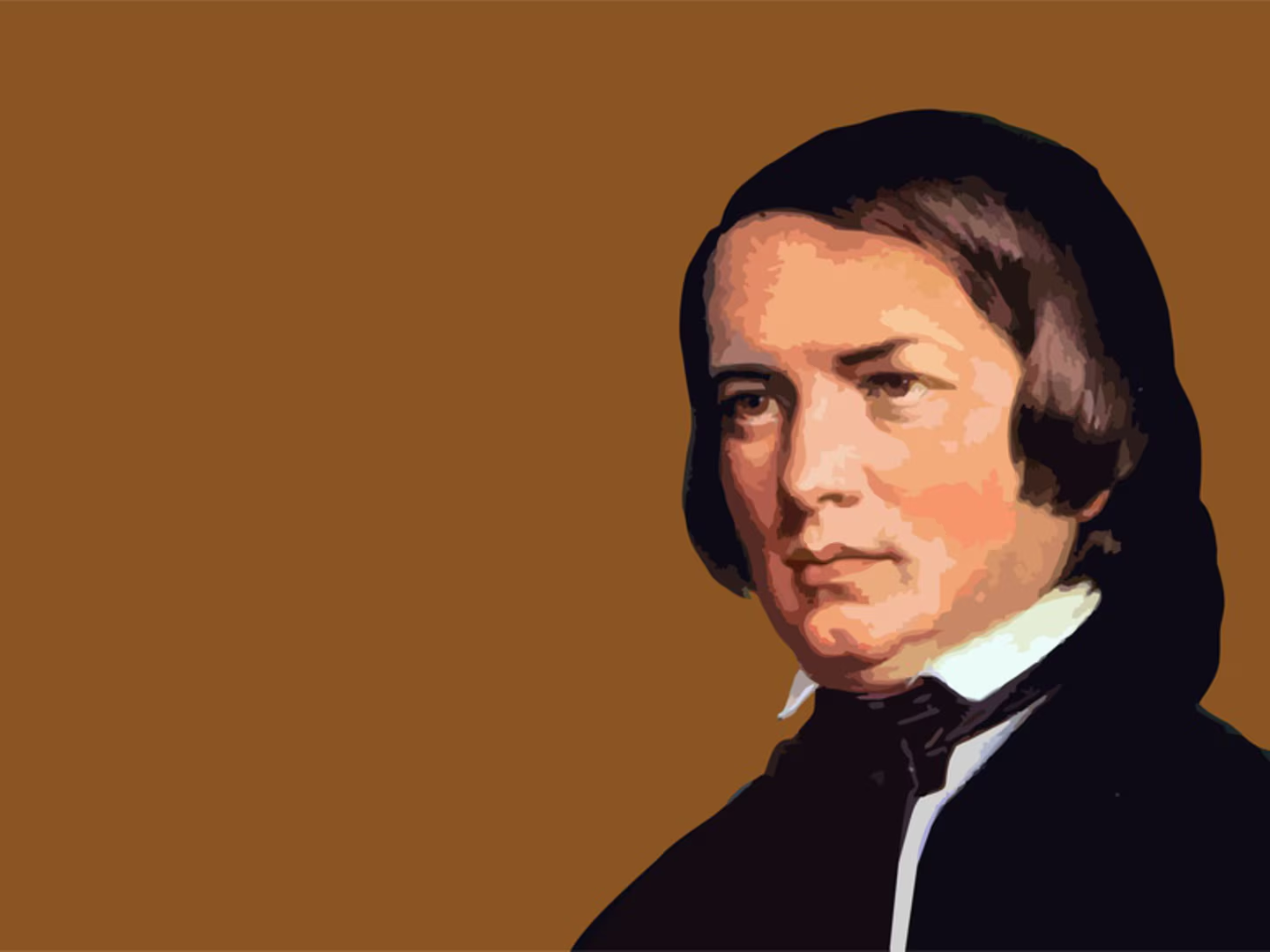
Robert Schumann: Kasleriana
Robert Schumann’s Kreisleriana, Op. 16 – here heard in an arrangement by Ajtony Csaba – stands among the most imaginative and psychologically charged works of early Romanticism. Composed in 1838 during a turbulent period in Schumann’s life, the cycle of eight piano fantasies was inspired by the eccentric, half-fictional figure of Kapellmeister Johannes Kreisler, created by the writer E. T. A. Hoffmann.
The selected fourth movement (Sehr langsam) distills the introspective and inward-looking side of this dual world. Schumann’s music is marked by sudden contrasts—between agitation and stillness, turbulence and lyrical calm—mirroring the composer’s own emotional landscape during his fraught courtship with Clara Schumann. In this chamber arrangement, the intimate, almost confessional character of the original is reimagined through a refined interplay of instrumental colors, preserving the work’s fragile expressivity while opening new perspectives on its inner voices.
György Kurtág: Bref messages
Kurtág’s Bref messages plays a central role: serving as a nodal point that connects different musical worlds and modes of thought. Brefs Messages was commissioned by the Ensemble Contrechamps, to whom György Kurtág dedicated the work, along with the conductor of the premiere, Olivier Cuendet. This concise, four-movement composition unfolds as a sequence of musical dedications. The first movement (Fanfare) is dedicated to Cuendet, while the second (Versetto: Temptavit Deus Abraham – apocryphal organum) is dedicated to László Dobszay. The third and fourth movements are reworkings of earlier material: the former (Ligatura Y) is based on a piece from Kurtág’s piano cycle Játékok, while the latter (Bornemisza: Az ütés…) draws on texts from Péter Bornemisza.
György Kurtág – Johann Sebastian Bach: Actus Tragicus
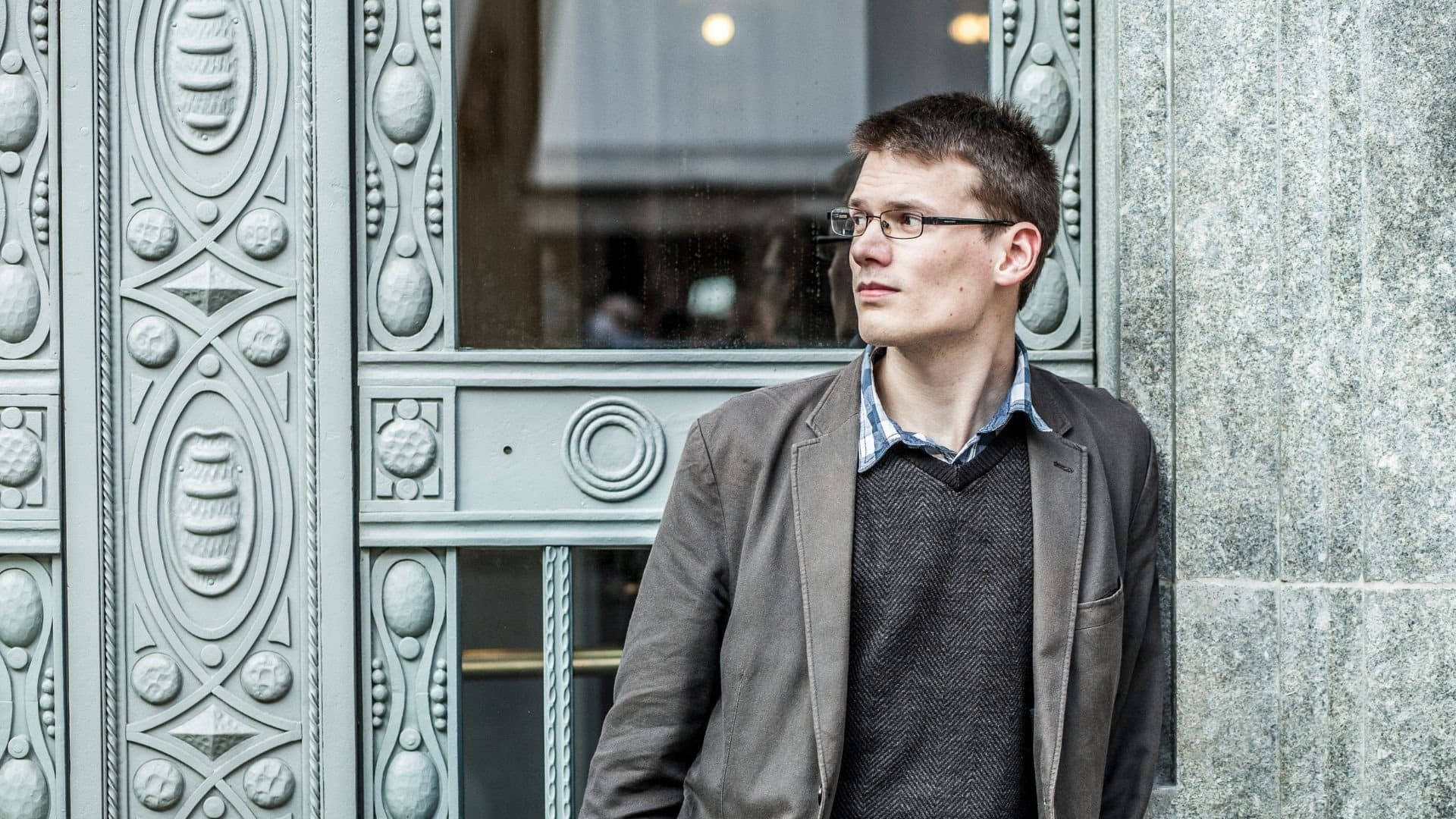
Máté Balogh: BABEuropeL
György Kurtág: Hommage à R. Sch.
György Kurtág’s Hommage à R. Sch. pays tribute to Robert Schumann, one of the central artistic reference points in Kurtág’s oeuvre. While Kurtág and his compatriot György Ligeti represent two contrasting paths within Hungarian modernism, Kurtág’s music is marked by an extreme concentration on miniature forms, drawing expressive intensity from the smallest gestures and most delicate transitions, often in dialogue with the musical past.
Structured as a sequence of six concise movements, Hommage à R. Sch. reimagines the Romantic genre of the character piece. The work evokes Schumann’s literary and musical alter egos—Florestan, Eusebius, and Master Raro—as well as the figure of Kapellmeister Kreisler, borrowed from E. T. A. Hoffmann and immortalized in Schumann’s Kreisleriana. Scored in a similar instrumentation to Schumann’s Märchenerzählungen for clarinet, viola, and piano, the piece unfolds as a series of fragmentary reflections, where quotations, allusions, and personal references intertwine.
The final movement, marked as a farewell, opens a broader historical perspective: it juxtaposes Schumann’s imagined voice with echoes of medieval polyphony, invoking Guillaume de Machaut through strict rhythmic patterns reminiscent of isorhythm. In this closing gesture, Kurtág creates a soundscape that is at once austere and deeply expressive—a restrained musical procession that gradually dissolves into silence.

Nina Šenk: Baca II
“My music is rooted in tradition, yet shaped by fresh sounds, new instrumental colors, and evolving atmospheres. I often work with very small musical ideas, transforming them continuously until they become almost unrecognizable. In Baca, I avoid strong contrasts—material is introduced and gradually reshaped, with new elements emerging מתוך existing structures and later becoming dominant.
The form of the piece is inspired by the process of glassmaking: musical elements are “melted” together at high intensity in the first part, then shaped and gradually cooled toward the end. This is not a literal depiction, but a structural idea. The inspiration also comes from the notion of “breaking the glass ceiling,” as well as from the ancient craft of glass bead making—baca meaning “bead” in Latin. The work connects artistic processes with social realities, including the position of women in society.
Baca was commissioned by BBC Radio and premiered by members of the Berlin Philharmonic at the BBC Proms in 2018. Baca II, a newly instrumented version, was premiered at the Slovenian Music Days in Ljubljana in 2019.
As in many of my works, Baca II is built on the continuous transformation of a small motif, gradually forming a unified whole—much like a glass bead, which embodies both fragility and strength, reflecting the position of female artists in society.” (Nina Šenk)
Judit Varga: Zankend – Stille, stumm, still. Hommage to Márta Kurtág
„My piece Zankend – Stille, stumm, still (Quarrel – silence, mute, silence) was written in memory of Márta Kurtág, although the title could have come from György Kurtág’s Játékok. The work, with its personal tone, is a farewell symphony that traces the five stages of grief – denial, anger, bargaining, depression, acceptance. It is at once about remembering and forgetting, anger and love. Over the course of the play, the quarrel becomes a dialogue, the anger calms down, the strange, an awkard dance becomes an enchanted waltz. All this was born from the ruins of a forgotten piano concerto that was never finished: the first drafts were painstakingly scribbled out over several weeks, overwritten, so that a completely new music could be born from the empty beats. So it became a two-part piece: under the audible layer there is an invisible other half.” (Varga Judit)
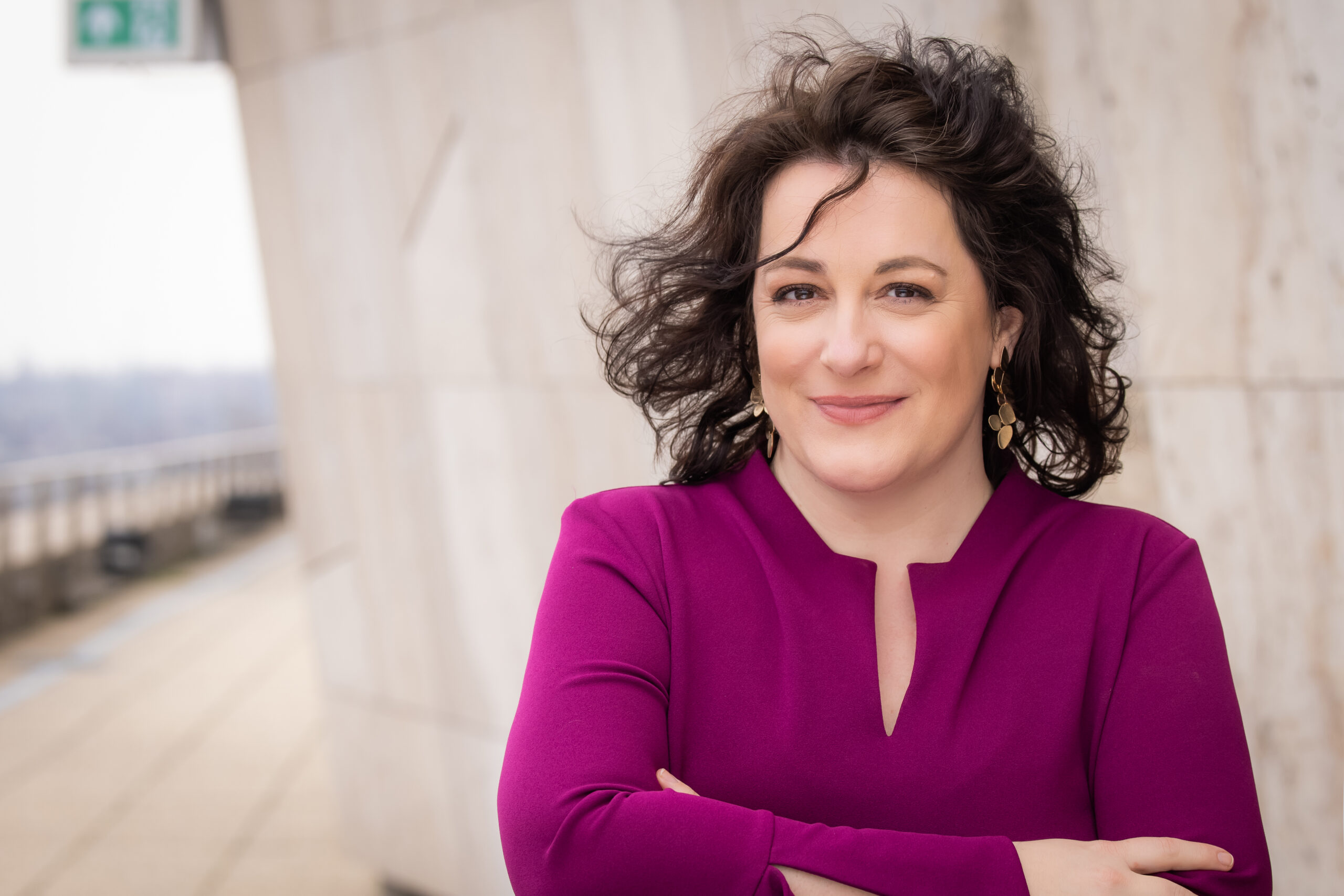
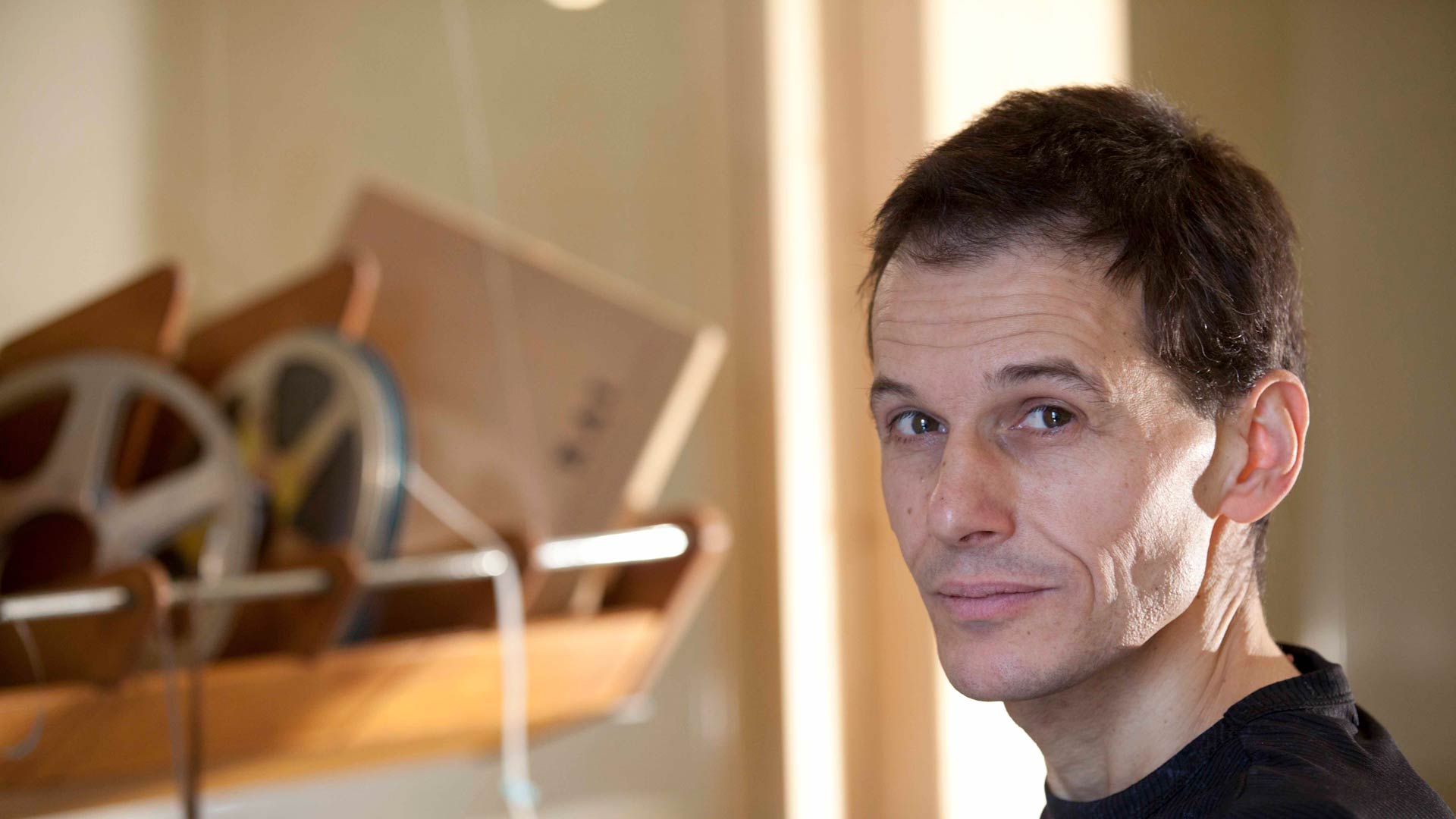
Marco Stroppa: élet… fogytiglan – imaginary dialogue between a poet and a philosopher
Marco Stroppa’s élet…fogytiglan takes its title from János Pilinszky’s short poem, Az ágy közös, a párna nem – ‘The bed is shared, the pillow is not.’ Dedicated to Tamás Klenjánszki, the piece places Pilinszky’s compressed image of proximity without communion in dialogue with quotations from Ludovico Geymonat’s La Libertà. This performance presents movements II, IV, and I.
II. Libertà e Violenza (Freedom and Violence) – Lancinante, inflessibile (piercing, unyielding)
“The so-called civilized countries, being clearly stronger economically and militarily, can claim to impose as universally accepted and legitimate the kind of violence they practice. (…) But on what basis can we distinguish ‘civilized’ peoples from ‘uncivilized’ ones?”
Ludovico Geymonat, La Libertà, p. 44
IV. La libertà come indipendenza (Freedom as Independence) – Subdolo, inafferrabile (insidious, elusive)
“The distinguishing feature of the concept of freedom as the freedom of peoples is precisely that it is
opposed to every dogma, whether religious or political. In reality it is a ‘freedom against’: a freedom clarified more by determining what it fights against than by what it seeks to propose positively.”
Ludovico Geymonat, La Libertà, p. 23
I. Libertà e Potere (Freedom and Power) – Vacillante, accanito (wavering, relentless)
“To defend freedom means to defend change, or at least the possibility of change.”
Ludovico Geymonat, La Libertà, p. 103
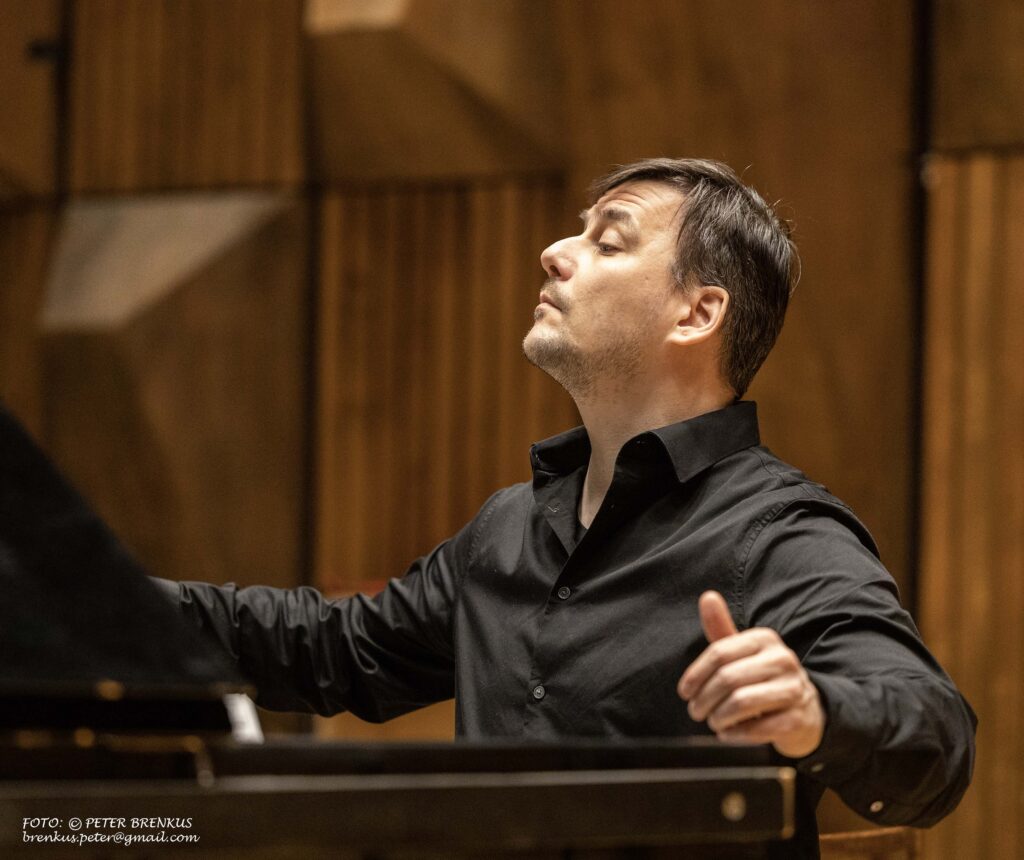
Ivan Buffa: Earthpulse (world premiere)
“The inspiration for Earthpulse emerged from an intense personal experience of perceiving the energy that radiates from nature. It is a moment one might recognize—standing alone in an open meadow, sensing a powerful, almost tangible force emanating from the surrounding landscape.
This composition represents an attempt to capture that experience in sound. The creative process led me to search for appropriate sonic means capable of conveying not the external form of nature, but its inner vitality. Rather than imitating natural sounds, the piece seeks to evoke the sensation of being immersed in this field of energy.
Earthpulse is therefore not a depiction, but a reflection of a lived experience—an exploration of the subtle yet profound connection between human perception and the dynamic presence of the natural world.” (Ivan Buffa)
About György Kurtág
György Kurtág was born on February 19, 1926, in Lugos in the Banat region (Romanian: Lugoj).
He has been a Hungarian citizen since 1948 and also acquired French citizenship in 2002. He began studying the piano at the age of five with Klára Vojkicza-Peia. He owed much to making music together with his mother, with whom he played four-hand arrangements of symphonies by Haydn and Beethoven, as well as Mozart overtures.
The first truly formative teacher who provided him with lifelong experiences—also deeply influencing his work as a composer—was Magda Kardos in Timișoara. He began his composition studies (harmony and counterpoint) with Max Eisikovits, also in Timișoara. In September 1945, he applied to the Music Academy in Budapest, where he met György Ligeti, with whom he developed a lifelong friendship. He began his studies in Budapest in 1946: his teachers included Pál Kadosa (piano), Leó Weiner (chamber music), Sándor Veress and later Ferenc Farkas (composition), while he also received important impulses from Pál Járdányi. He graduated in 1951 in piano performance with Pál Kadosa and in chamber music with Leó Weiner, and in 1955 he earned his composition diploma with Ferenc Farkas.
In 1947, he married Márta Kinsker, who—as his life partner, the mother of their son György Kurtág Jr. (born 1954), a pianist, and the first listener and critic of his emerging compositions—played a decisive role in his life until her death in 2019.
In 1957–1958, he attended the courses of Olivier Messiaen and Darius Milhaud in Paris, but the most profound influence came from Marianne Stein. She not only helped him overcome a creative crisis that had paralyzed his composing for years, but also opened a new chapter in his career (“Marianne halved my life”) and gave him direction. This explains the dedication of his String Quartet, Op. 1, and later the Kafka Fragments, Op. 24, to her. During his months in Paris, Kurtág gained lasting musical impressions from the concerts of the Domaine musical, where he heard numerous works by Pierre Boulez conducted by the composer himself. This period, along with a few days spent in Cologne on his way home—where he reunited with Ligeti, encountered Stockhausen, and heard his Gruppen for three orchestras—had a decisive impact on his career. These experiences played a major role in the creation of his String Quartet No. 1.
Between 1960 and 1968, Kurtág worked as a répétiteur for the soloists of the Hungarian National Philharmonia, and in 1967 he began teaching at the Budapest Academy of Music. Initially, he served as assistant to Pál Kadosa in the piano department, later teaching chamber music. He retired in 1986, but continued to teach regularly at the Academy until 1993. Since then, he has continued to give chamber music masterclasses throughout Europe and the United States. In 1971, he spent a year in West Berlin on a DAAD scholarship. He was awarded the Kossuth Prize in 1973 (and again in 1996).
In 1981, the Ensemble InterContemporain premiered Messages of the Late R. V. Troussova, Op. 17, in Paris for soprano and chamber ensemble (soloist: Adrienne Csengery, conductor: Sylvain Cambreling). The overwhelming success of this work launched Kurtág’s international career. In 1993, he moved to Berlin for two years at the invitation of the Wissenschaftskolleg, serving as composer-in-residence with the Berlin Philharmonic. He later held similar residencies at the Vienna Konzerthaus (1995/96), followed by Amsterdam (1996–1998), Berlin again (1998–1999), and Paris (1999–2001). Between 2001 and 2015, the Kurtág couple lived near Bordeaux in St. André de Cubzac before returning to Budapest.
György Kurtág has received numerous honors and awards. In 1998, he was awarded the prize of the Ernst von Siemens Music Foundation, and in 2006 his composition …concertante…, Op. 42, received one of the world’s most prestigious music awards, the Grawemeyer Award.
In 2018, his opera Fin de partie, based on the play by Samuel Beckett, premiered at La Scala in Milan and was subsequently performed in Amsterdam, Valencia, and Paris. In 2026, we are celebrating his 100th birthday.
We are grateful for the generous support of